
v 1.1
PULSE
Winter 2025 | 4 Weeks
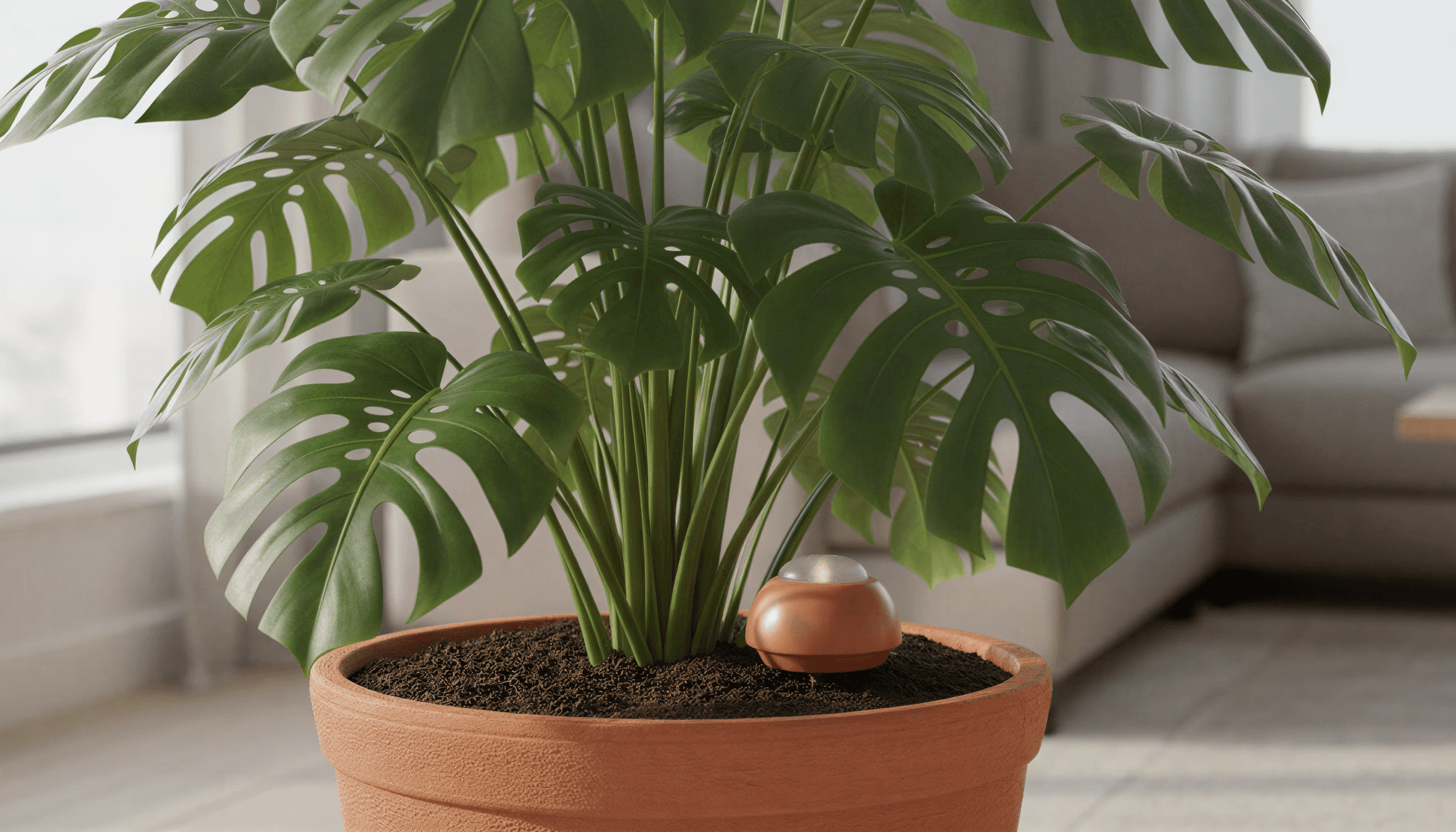
Self-powered plant monitor using renewable technology to help bridge the communication between plants and their owners.
Soil-Related Deficiencies are the leading causes of plant deaths.
Because surface dryness is often misleading, many plants are overwatered long before symptoms appear above the soil.

Of the existing solutions...
multi-function sensors offers the most feedback and can be used on a wider variety of plants.
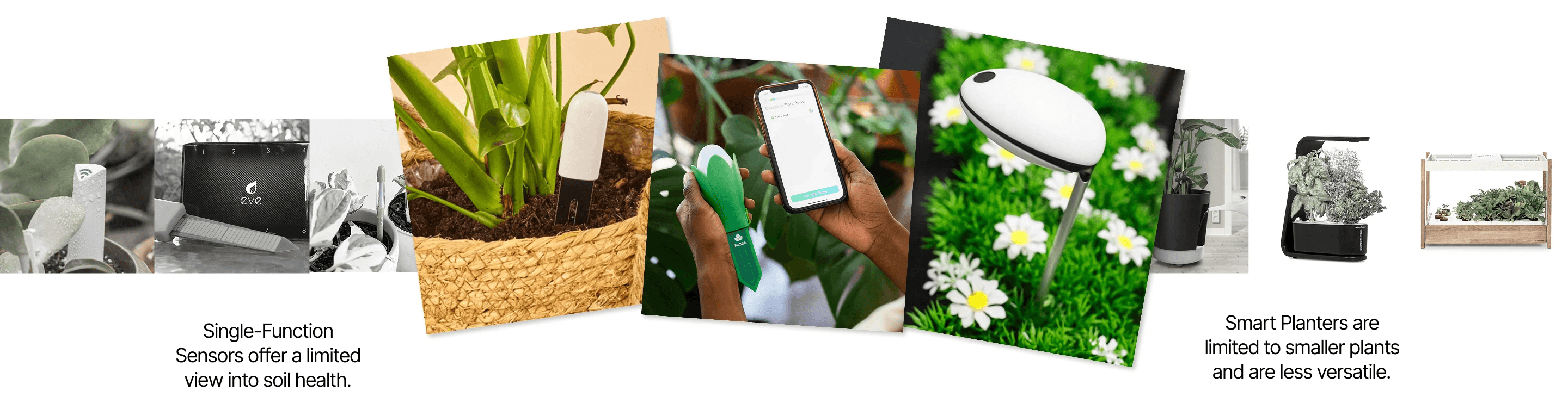

Unfortunately, the only existing renewable solution in this category relies on solar power, is designed for outdoor use, and is ineffective in low-light indoor environments.
Products such as Gardena, Florapod, and Flower Power integrate multiple sensing capabilities into a single device, increasing both manufacturing complexity and retail price.
While these systems offer expanded functionality, their cost often outweighs the practical needs of everyday houseplant owners.
Unfortunately, the only existing renewable solution in this category relies on solar power, is designed for outdoor use, and is ineffective in low-light indoor environments.
Products such as Gardena, Florapod, and Flower Power integrate multiple sensing capabilities into a single device, increasing both manufacturing complexity and retail price.
While these systems offer expanded functionality, their cost often outweighs the practical needs of everyday houseplant owners.
Unfortunately, the only existing renewable solution in this category relies on solar power, is designed for outdoor use, and is ineffective in low-light indoor environments.
Products such as Gardena, Florapod, and Flower Power integrate multiple sensing capabilities into a single device, increasing both manufacturing complexity and retail price.
While these systems offer expanded functionality, their cost often outweighs the practical needs of everyday houseplant owners.
Microbial Fuel Cell technology can change that.
A Microbial Fuel Cell (MFC) uses natural microbes to turn organic waste into small amounts of electricity.
A technology gaining traction in research environments, where its limits and potential applications are actively being explored.

Microbial Fuel Cell technology can change that.
A Microbial Fuel Cell (MFC) uses natural microbes to turn organic waste into small amounts of electricity.
A technology gaining traction in research environments, where its limits and potential applications are actively being explored.
Microbial Fuel Cell technology can change that.
A Microbial Fuel Cell (MFC) uses natural microbes to turn organic waste into small amounts of electricity.
A technology gaining traction in research environments, where its limits and potential applications are actively being explored.

“Microbial fuel cells (MFC’s)....electroactive bacteria oxidize biodegradable substrates at the anode releasing electrons and protons...the electrons flow to the cathode while the protons migrate through an ion-conductive medium to complete the circuit”
“Microbial fuel cells (MFC’s)....electroactive bacteria oxidize biodegradable substrates at the anode releasing electrons and protons...the electrons flow to the cathode while the protons migrate through an ion-conductive medium to complete the circuit”
“Microbial fuel cells (MFC’s)....electroactive bacteria oxidize biodegradable substrates at the anode releasing electrons and protons...the electrons flow to the cathode while the protons migrate through an ion-conductive medium to complete the circuit”

To understand how microbial fuel cells could realistically live inside a consumer object, we built and tested a simple soil-based MFC.

To understand how microbial fuel cells could realistically live inside a consumer object, we built and tested a simple soil-based MFC.
To understand how microbial fuel cells could realistically live inside a consumer object, we built and tested a simple soil-based MFC.

Using the previous framework, our prototypes were able to generate a consistent charge.
Using the previous framework, our prototypes were able to generate a consistent charge.
Using the previous framework, our prototypes were able to generate a consistent charge.
Now imagine a multi-function sensor where this technology can be used to signal when your plant needs attention.
Design Principles moving forward:

Biophillic Forms: Echoing natural forms, rhythms, and materials.

Circular by Design: Power, materials, and lifecycle choices that reduce waste and external dependency.

Natural and Honest Materials: Terracotta for example offers a naturally porous and natural character.

Quiet Technology: Recedes into the background, allowing the experience to feel calm and intuitive.
Design Principles moving forward:
Biophillic Forms: Echoing natural forms, rhythms, and materials.
Circular by Design: Power, materials, and lifecycle choices that reduce waste and external dependency.
Natural and Honest Materials: Terracotta for example offers a naturally porous and natural character.
Quiet Technology: Recedes into the background, allowing the experience to feel calm and intuitive.
Design Principles moving forward:
Biophillic Forms: Echoing natural forms, rhythms, and materials.
Circular by Design: Power, materials, and lifecycle choices that reduce waste and external dependency.
Natural and Honest Materials: Terracotta for example offers a naturally porous and natural character.
Quiet Technology: Recedes into the background, allowing the experience to feel calm and intuitive.


A proper height of 4 - 6 inches ensures the sensor gives an accurate reading as to when a plant will need watering.
A proper height of 4 - 6 inches ensures the sensor gives an accurate reading as to when a plant will need watering.
A proper height of 4 - 6 inches ensures the sensor gives an accurate reading as to when a plant will need watering.

Ergonomic testing was done to find what best suits the user’s hand and varying pot sizes.
Ergonomic testing was done to find what best suits the user’s hand and varying pot sizes.
Ergonomic testing was done to find what best suits the user’s hand and varying pot sizes.


Terracotta was selected for passive moisture and airflow
creating favorable conditions for soil microbes while protecting internal components.

Carbon felt was selected for non-corrosive nature and high surface area
creating favorable conditions for soil microbes while protecting internal components.
Terracotta was selected for passive moisture and airflow
creating favorable conditions for soil microbes while protecting internal components.
Carbon felt was selected for non-corrosive nature and high surface area
creating favorable conditions for soil microbes while protecting internal components.
Terracotta was selected for passive moisture and airflow
creating favorable conditions for soil microbes while protecting internal components.
Carbon felt was selected for non-corrosive nature and high surface area
creating favorable conditions for soil microbes while protecting internal components.


The light pulses at the same pace as the soil’s biological activity.

The light pulses at the same pace as the soil’s biological activity.
The light pulses at the same pace as the soil’s biological activity.

While PULSE communicates soil vitality through physical signals, a companion app provides deeper insight over time.
It tracks moisture and pH trends, organizes plant care across multiple pots, and supports users without replacing the quiet, everyday experience of the object itself.

While PULSE communicates soil vitality through physical signals, a companion app provides deeper insight over time.
It tracks moisture and pH trends, organizes plant care across multiple pots, and supports users without replacing the quiet, everyday experience of the object itself.
While PULSE communicates soil vitality through physical signals, a companion app provides deeper insight over time.
It tracks moisture and pH trends, organizes plant care across multiple pots, and supports users without replacing the quiet, everyday experience of the object itself.
